Coin Pusher Parts You Can See: A Physical-Machine Guide
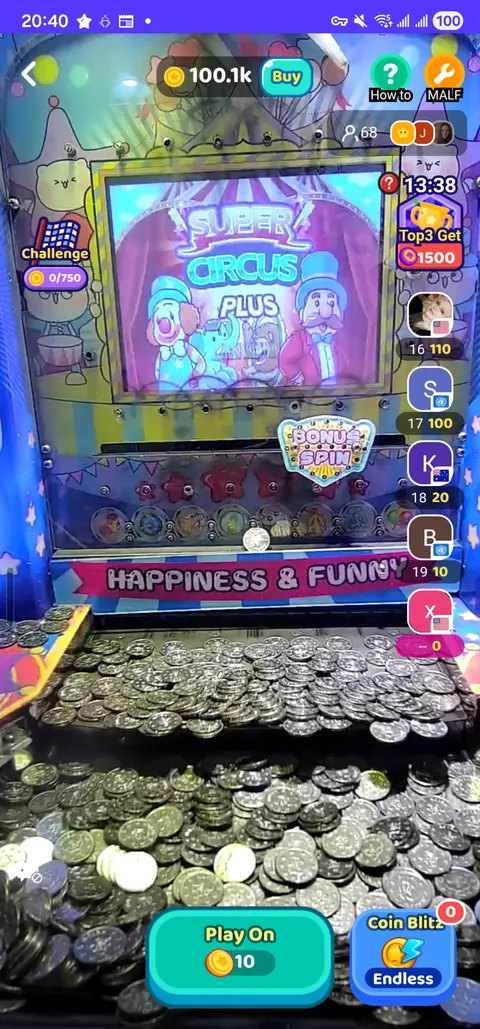
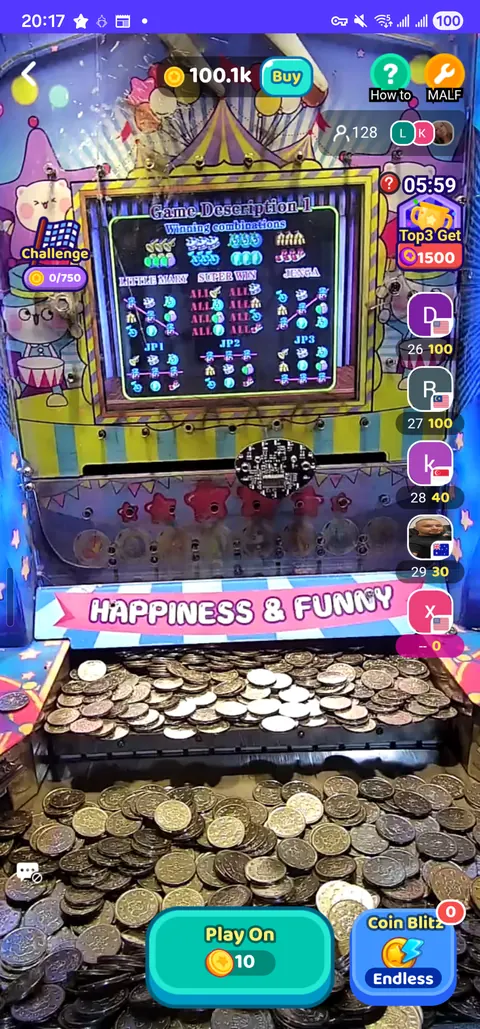
A physical coin pusher is built around a changing field of tokens and a shelf that moves through a repeated mechanical cycle. From a player’s view, the most useful parts to recognize are the drop area, moving shelf, stacked playfield, front edge, side areas, and the interface used to release a token.
Overview
This guide describes physical parts and visible movement only. It does not explain cash payout, reward value, probability, expected return, or a “best” drop point.
Quick visual glossary
| Visible part | What it means in this guide | What it does not tell you |
|---|---|---|
| Drop area | Where a released token enters the physical field | A guaranteed landing point or result |
| Moving shelf | The mechanical surface that cycles backward and forward | Payout rate, internal speed, or hidden settings |
| Stacked playfield | The visible layers of tokens and physical objects | Exact value or what will fall next |
| Front edge | The forward boundary of the visible field | The account result before it is recorded |
| Side areas | The left and right boundaries beside the main field | Universal reward rules or what every machine records |
| Cabinet and guards | The enclosure, rails, glass, and clear dividers | Current availability or an official machine identity |
| On-screen control | The interface used to position the drop arm and release a token | Control over every later movement in the field |
The drop area
The drop area is the place where a newly released token enters the physical machine. Depending on the cabinet, the visible path may include a chute, slide, arm, or another guiding mechanism.
In Claw Eden’s confirmed physical format, the player positions the drop arm and releases a token. The exact landing position still depends on the physical movement that follows.
A drop area is not a “winning zone.” A visual guide can identify where the token enters, but it cannot establish the best position, exact timing, probability, or final recorded result.
The moving shelf
The moving shelf is the mechanical surface that cycles backward and forward. Some technical sources use related terms such as moving coin slide or pusher box for machine-specific assemblies, but the names are not interchangeable across every machine.
Its movement transfers force through the tokens already on the field. The player releases a token; the machine continues its physical cycle. The player does not directly control every token that shifts afterward.
This page does not publish shelf speed, stroke length, internal motor information, or operator settings. Those details are machine-specific and are not needed to recognize the visible part.
The stacked playfield
The playfield is the visible surface or set of surfaces holding the tokens. Physical coin pushers may use more than one level, so a camera view can show an upper moving layer and a lower field closer to the front.
“Stacked playfield” describes what the player can see: overlapping tokens at different positions and heights. It does not assign a cash value, reward value, or expected return to the field.
The arrangement changes when tokens enter and the shelf moves. An old screenshot is therefore an interface example, not a fixed representation of the next play.
The front edge
The front edge is the forward boundary of the visible playfield. Physical movement can carry tokens toward or over an edge, but the visible event and the recorded account result remain separate checks.
For the Claw Eden physical format described here, the result follows what the real machine actually drops and what is recorded for the play.
This page does not define the reward attached to every visible object or edge event. Independent reward rules remain outside this parts guide.
The side areas
Side areas are the visible spaces beside the main token field. Some machines use guards, channels, walls, or openings in these areas.
Their exact function varies. Do not assume that an object moving to one side always has the same result across machines, operators, or game configurations.
For Claw Eden, only the current approved game instructions and recorded result can establish what a completed physical play was credited with. The image itself is not enough.
The cabinet, glass, and clear guards
The cabinet holds the moving shelf, playfield, token path, lighting, and other hardware. Glass or clear guards keep the field visible while separating moving parts and side areas.
These surfaces can create reflections and partial obstructions. A live camera view may not show every edge or internal component at once.
The appearance of a cabinet also does not prove a manufacturer, current room status, reward system, or whether a different game is physical or virtual.
The camera view and on-screen control
Remote physical play combines a camera view with an interface. The camera shows the machine; the control lets the player use the options provided for the room.
In the confirmed Claw Eden physical coin-pusher flow, the player positions the drop arm and releases a token. The machine then completes the physical motion, and the play produces a recorded result.
The interface may also contain balances, prices, audience information, challenges, or historical state. Those are not machine parts and should not be treated as evergreen facts in a visual glossary.
What a parts guide cannot tell you
A photo or live frame cannot establish:
- an optimal drop point or exact timing;
- the probability that any token will move or fall;
- payout, RTP, cash value, prize value, or expected return;
- current price, room availability, challenge, ranking, or audience;
- universal side-area or edge rules;
- the final recorded result before the physical play is complete;
This guide is deliberately limited to visible physical vocabulary.
Frequently asked questions
Is the moving shelf the same as the playfield?
Not always. The moving shelf is the part that cycles mechanically. A coin pusher may also have a lower or stationary playfield holding other tokens.
Is the drop area always visible?
No. Camera framing or cabinet construction can hide part of the token path. Do not label a specific area unless the current view clearly shows it.
Does every token over the front edge have the same result?
This guide does not make that universal claim. The physical event and recorded result must be checked under the current approved game rules.
Are side areas always loss areas?
No universal rule is stated here. Their physical design and recorded meaning can vary.
Can I identify a physical coin pusher by cabinet artwork?
No. Artwork and visual style are not reliable identity evidence. This page is explicitly scoped to Claw Eden's confirmed physical format.